Career Coach London — When Success Stops Feeling Like Enough | Kasia Siwosz

You are good at what you do.
Objectively, demonstrably good. The career you've built is real. The results are there. The reputation is there. The salary is there.
And yet something is pulling at you.
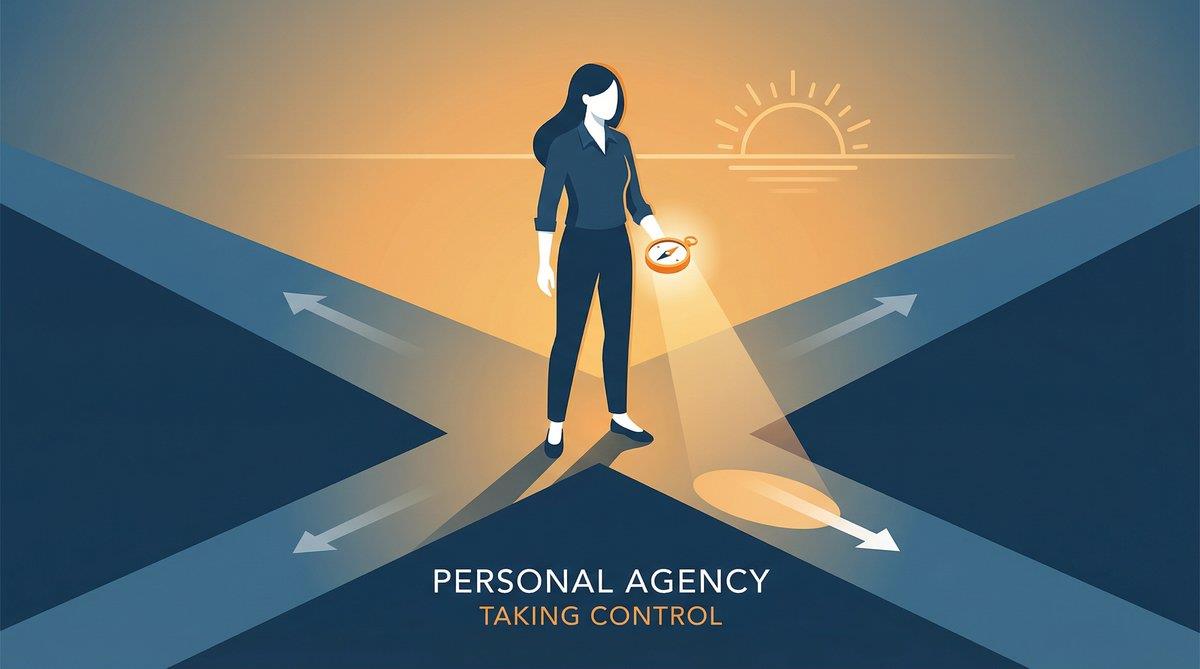
Not loudly. Not dramatically. Just a quiet, persistent sense that the chapter you're in is no longer the chapter you're meant to be in. That the thing that drove you here — the ambition, the hunger, the sense of purpose — has quietly changed direction without telling you.
You don't know what comes next. You're not sure you're allowed to admit that. And the longer you stay in something that no longer fits, the more you wonder whether the problem is the work — or you.
It's not you.
It's the work.
And this is exactly what career coaching in London is for.
What Career Coaching in London Actually Is
Career coaching is not CV writing. It is not interview preparation. It is not a recruiter with a nicer job title.
Career coaching at the level I work at is a rigorous, honest process of figuring out what you actually want — not what looks impressive, not what pays the most, not what your parents hoped for — and building a clear, evidence-based plan to get there.
Most people who come to me for career coaching are not struggling. They are succeeding. But they are succeeding at the wrong thing, or at a version of the right thing that no longer fits who they've become.
The career that made sense at 28 does not automatically make sense at 38. The role that felt like an achievement when you landed it does not automatically continue to feel like an achievement five years later. The industry that excited you when you entered it does not owe you continued excitement.
Growth changes what you need. And when what you need changes, staying put has a cost — not just in satisfaction, but in performance, in health, in the quality of every hour you spend doing work that no longer means what it used to mean.
Career coaching is the process of getting honest about that cost. And doing something about it.
Why I Am the Right Career Coach for You
I have rebuilt my career four times.
Not metaphorically. Not gradually. Four distinct, significant pivots — each one requiring me to leave behind something I had built, step into uncertainty, and construct something new from a different starting point.
I was a professional tennis player on the WTA tour. I left sport and had to figure out who I was without it — without the identity, the structure, the clear metrics of success that professional athletics provides. That transition, from elite athlete to civilian, is one of the most disorienting experiences a high performer can face. I know it from the inside.
I went to UC Berkeley and then into investment banking in London. I left banking to open a restaurant. The restaurant failed. I learned more from that failure than from any success I've had — about resilience, about identity, about the difference between what you're good at and what you're built for.
I moved into venture capital. My fund closed during COVID. I was pregnant with my first child, without a clear professional path, and I spent months searching for a career coach in London who could help me navigate what came next. I couldn't find one who understood the specific experience of operating at a high level and needing to rebuild.
So I became one.
Six years later I have coached 200+ clients through career transitions of every kind — executives moving between industries, founders stepping back from their own companies, bankers leaving finance, professionals returning after career breaks, high performers who have reached the top of their current path and have no idea where the next path begins.
Every single one of those transitions required the same thing: honesty about what is no longer working, clarity about what actually matters, and the courage to move toward it even without a guaranteed outcome.
I have done that work myself. Repeatedly. That is not a credential. It is the foundation of every conversation I have.
The Three Career Transitions I See Most Often in London
In six years of career coaching in London I have worked with hundreds of people navigating career change. The situations vary enormously but they cluster around three distinct patterns.
The first is the high performer who has outgrown their role. They are still performing well. The organisation still values them. From the outside nothing is wrong. But internally something has gone flat. The work that used to challenge them no longer does. The problems they are solving feel solved — not interesting. They are going through the motions of a career that was right for a previous version of themselves.
The second is the person in the wrong industry entirely. They made decisions early in their career based on what seemed prestigious, what paid well, what their university peers were doing. Those decisions built a strong career. But the industry never really felt like theirs. And after a decade or more of excelling at something they were never fully invested in, the gap between their performance and their satisfaction has become impossible to ignore.
The third is the person after an ending. A redundancy. A company failure. A restructure. A decision to leave. The chapter has closed — not always by choice — and the question of what comes next is both open and urgent. These are often the clients who get the most from career coaching because the ending, however painful, creates the space for genuine clarity about what they actually want rather than what they fell into.
All three of these situations require the same thing from a career coach. Not advice. Not a recommended list of industries to explore. Not a framework for thinking about transferable skills. They require a thinking partner who can hold up a clear mirror, ask the uncomfortable questions, and help you build the honest case for what comes next — based on who you actually are, not who you think you should be.
What Career Coaching Looks Like in Practice
Every career coaching engagement I take on is different. There is no standard programme, no six-session structure, no workbook that gets applied regardless of who is sitting across from me.
What there is, consistently, is a process built around three things.
The honest inventory. We start by getting precise about what is actually working and what isn't — in your current role, in your broader career, in your relationship with work itself. Not the story you tell at dinner parties. Not the version on your LinkedIn profile. The real assessment. What energises you. What drains you. What you are genuinely exceptional at versus what you have simply become competent at through repetition. What you have been tolerating for so long that you've forgotten it's a choice.
The clarity building. Once the honest inventory is complete we start building toward what comes next. Not by exploring every possible option — that way leads to paralysis. But by identifying the specific combination of factors that make work feel meaningful for you specifically. The environments where you perform at your best. The problems that genuinely engage you. The type of impact that matters to you. The non-negotiables you've been compromising on. This is not a personality test. It is a forensic examination of your own evidence.
The action plan. Clarity without action is expensive reflection. Everything we identify gets translated into specific next steps with specific timelines. Conversations to have. Decisions to make. Options to test. I hold you accountable to the commitments you make in the room — because the biggest risk in career transition is not making the wrong choice. It is making no choice and staying in something that no longer fits indefinitely.
The Career Coaching Conversation Nobody Else Will Have With You
Here is the thing about career transitions at a senior level that most career coaches will not tell you directly.
The practical barriers — the CV, the network, the industry knowledge, the transferable skills — are almost never what stops people from making the move they know they need to make.
What stops them is identity.
At a senior level your career is not just what you do. It is who you are. The title on your business card, the firm you represent, the industry you operate in — these things are woven into your sense of self in ways that are genuinely difficult to separate from your actual identity.
Which means that leaving — even when you know you should, even when you want to, even when staying is clearly costing you — feels like a kind of death. Not of the role. Of a version of yourself.
I know this feeling precisely. When I left professional tennis I lost an identity that had defined me since I was six years old. When I left banking I left a professional community and a status that had shaped how I saw myself. When my VC fund closed I had to let go of an entrepreneurial identity that I had built over years.
Each of those endings felt like losing something essential. Each of them turned out to be making space for something better.
That is the conversation most career coaches will not have with you — because it requires them to have been through it themselves to have it with any credibility.
I have been through it. Multiple times. And that recognition — between someone who has navigated the same territory and someone who is about to — is the foundation of the most useful career coaching conversations I have.
Who I Work With as a Career Coach in London
My career coaching clients are typically senior professionals, executives, founders and high performers who are facing a significant career decision or transition.
They are not people who need to be rescued. They are not struggling with basic professional function. They are people who are operating at a high level and are facing a choice — or have already made one — that requires more clarity and more honesty than their current environment can provide.
They tend to share certain qualities.
They are intellectually serious. They engage with the work rigorously and push back when they disagree. They bring the same analytical rigour to thinking about their career that they bring to their professional work.
They are ready to be honest. The clients who get the most from career coaching are the ones who come in already knowing that the polished version of their situation is not what we're working with. They are ready to say the things they haven't said out loud yet.
They are ready to act. Career coaching is not a space for indefinite contemplation. It is a space for building clarity and then moving. The clients who get the most from this work are people who, once they have clarity, move toward it — even when it is uncomfortable, even when it is uncertain, even when the people around them don't understand.
Career Coaching vs Executive Coaching vs Life Coaching
These distinctions matter less than most coaches suggest. Here is the practical reality.
Career coaching focuses specifically on professional direction — what you do, where you do it, and why. It is particularly useful at transition points — when something has ended, when something no longer fits, when a significant choice needs to be made.
Executive coaching focuses on how you lead and perform within your current role — decision-making, leadership effectiveness, organisational impact. It is most useful when you know where you are going and want to operate better within that direction.
Life coaching addresses the whole person — career, identity, purpose, relationships, energy. At the level I work, career questions are almost never purely professional. They are identity questions wearing professional clothes.
In practice the work I do with career coaching clients draws on all three — because the question of what comes next professionally is almost always inseparable from the question of who you are becoming personally.
What My Clients Say
"For years, I had been caught in a vicious cycle — the more successful I became, the more unhappy I felt. Kasia truly helped me unlock my full potential. My relationships have improved, my management skills have gone through the roof, and I've never felt more confident or capable in all my life."
"Kasia helped me see that I was getting in my own way. Since working with her I've become much more productive and happier than I could have ever imagined."
"She believed in me before I did. That changed everything."
"Kasia is an exceptional coach who really goes the extra mile. She has a unique combination of both understanding and firmness that made me feel like she truly believed in me even before I did."
Where We Work
I meet all career coaching clients in person at 67 Pall Mall, London SW1Y 5ES — in the heart of St James's, equidistant between Mayfair and the City of London.
The setting is private, discreet and entirely removed from your normal professional environment. That distance matters — particularly for career coaching, where the most important conversations often require stepping completely outside your normal context to think clearly.
For clients who travel frequently or are based outside London, sessions are available via video call.
Frequently Asked Questions
What is career coaching and how is it different from recruitment?
Career coaching is a structured process of building clarity about what you want from your professional life and creating a plan to get there. A recruiter finds you a job within a defined set of parameters. A career coach helps you figure out what the right parameters actually are — and challenges the assumptions you've been making about what is possible or appropriate for someone at your level.
How do I know if I need career coaching or executive coaching?
If your primary question is about direction — what you should be doing, where you should be going, whether your current path still fits — career coaching is the right tool. If your primary question is about performance — how to lead better, decide better, operate more effectively within your current role — executive coaching is more appropriate. In practice the two often overlap. I will tell you honestly in our first conversation which is right for your situation.
How long does career coaching take?
Every engagement is different. Some clients achieve significant clarity within a small number of sessions and are ready to move. Others work with me over several months through a more complex transition. I do not offer indefinite programmes. The goal is always your clarity and independence — not your continued engagement with coaching.
Is career coaching only for people who want to change careers?
No. Many of my career coaching clients are not looking to change careers entirely — they are looking to understand why their current career no longer feels the way it used to, and what needs to change within it or about their relationship to it. Sometimes the answer is a complete pivot. Sometimes it is a specific change within the same field. Sometimes it is a shift in how you are operating rather than what you are doing. We find out together.
How much does career coaching in London cost?
My fees reflect the level I work at and the clients I work with. For a conversation about fees and fit, book a consultation. The first conversation is complimentary and genuinely useful whether we work together or not.
Do you work with people who have been made redundant?
Yes. Redundancy is one of the most common entry points for career coaching. The combination of urgency, disrupted identity and genuine openness that redundancy creates often makes it the most productive context for this work. If you have recently been made redundant and are figuring out what comes next, I would encourage you to book a consultation sooner rather than later — before the pressure to simply find the nearest equivalent role overrides the opportunity to make a more considered choice.
Can career coaching be done online?
Yes. I work with clients globally via video call. The depth of this work does not require physical presence — it requires psychological presence and honesty. Many of my most significant career coaching breakthroughs have happened in online sessions.
What makes a good career coach in London?
Someone who has actually navigated significant career transitions themselves — not just studied them. Someone who will be honest with you about what they see rather than what you want to hear. Someone who measures success by the clarity and action you leave with, not by how long the engagement lasts. And someone whose own story is credible and relevant to the transitions you are facing.
Why choose you as my career coach in London?
I won't tell you to choose me. I'll tell you what I bring. I have rebuilt my career four times — from professional sport to investment banking to entrepreneurship to venture capital to coaching. I understand the specific experience of being a high performer who needs to rebuild from a different starting point. I understand the identity cost of leaving something you've built. And I understand — from evidence not theory — that the endings that feel most final are often the beginnings that matter most. If that is the kind of conversation you need, we should talk.
Book a Consultation
If any of this resonates — if you recognise yourself in what I've described — the next step is a conversation.
Not a sales call. A real conversation at 67 Pall Mall or online where I listen carefully to where you are, ask the questions that matter, and give you something genuinely useful whether we work together or not.