High Achievers, Higher Goals: Why Even Successful London Leaders Need a Coach


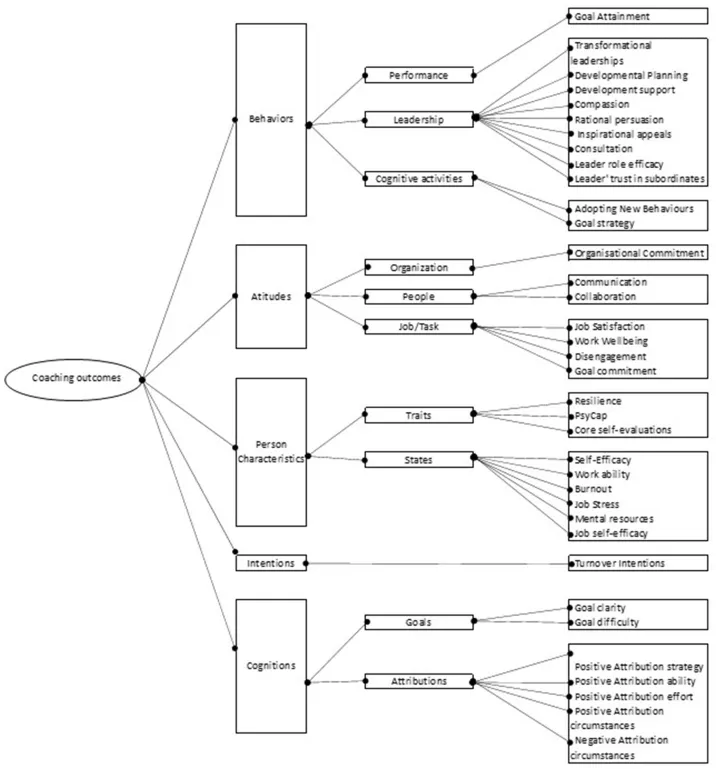
The studies show that executive coaching functions as an effective developmental tool which managers can use to improve their performance across multiple work environments. The strongest impact appears in behavioural change, followed by improvements in personal characteristics such as resilience or psychological resources, while attitudes show a smaller but still meaningful effect. The results of the statistical analysis show that coaching results in greater behavioral change than it does for both attitude and personal trait development.
Attitudes and personal characteristics maintain a consistent pattern, while the studies present different outcomes, which proves that context and program structure determine how a leadership coach alters leadership behavior (Nicolau et al., 2023).
The period in which a leader remained with his organization directly influenced his view of coaching effectiveness. The total time spent by the coach and leader together related directly to how the leader viewed their experience. The majority of leaders observed that outstanding coaches displayed their expertise through active listening to clients and showing interest in growth and providing them with guidance (Figlar, 2014).
The Leadership Paradox: Success That Stops You Growing
Organizations which spend money on executive coaching programs achieve successful results in 86% of their cases. The coaching process benefits leaders because it helps them maintain their performance after they achieve success. The study results show that 70 to 80% of executives experience work performance improvements together with increased self-confidence and better leadership abilities after they complete coaching programs (Percival, CJPI, 2026).
The author explains that all executives reach performance ceilings after showing their best work ability but achievement does not lead to better self-development. This demonstrates that leadership effectiveness results from three essential factors which include coachee motivation and leadership coach expertise and the coach-coachee relationship quality. The study proves that personal factors and environmental conditions control a leader's ability to keep developing their skills (Bozer, 2017).
When professional momentum turns into plateau
Executive coaching led to higher career satisfaction for participants although their job performance and task effectiveness showed minimal improvement without proper support. The research shows that professional development stops advancing when environmental factors do not support the required levels of development. The point is that improvements vary based on coaching support and environment.
The cost of invisible limits for London’s high performers
Bozer shows that coaching effectiveness depends on three factors which include the leadership coach, the leader, and the workgroup atmosphere. The organization has established hidden boundaries which prevent progress beyond these limits. High achievers will face career stagnation if organizations do not remove these obstacles which will result in decreased leadership development benefits and financial expenses for the organization.
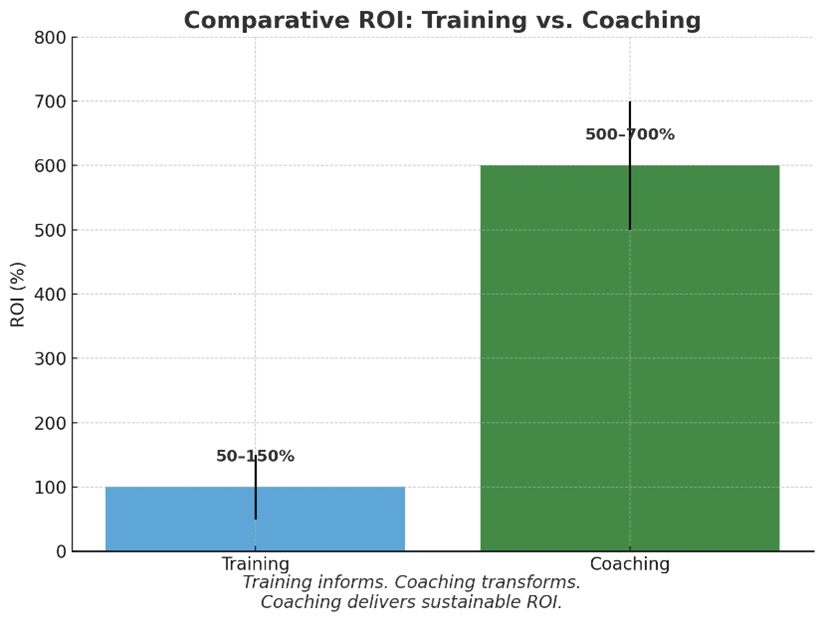
The United Kingdom and worldwide data demonstrate that companies which connect coaching to their strategic leadership development programs achieve an 86% success rate with their initial investment recovery while coaching delivers a 5-to-7 times ROI.
The independent research conducted in the UK shows that organizations which establish strong coaching cultures will achieve two benefits which include higher employee engagement and improved speed of leadership development and performance progress.
What Leadership Coaching Actually Does for Senior Professionals
The purpose of leadership coaching is to help senior executives who work in intricate and critical business situations. The performers both experience three specific obstacles which include problems with decision-making and accountability and their ability to perform at their best.
The coaching process helps leaders to transform their leadership challenges into actionable solutions which create a framework that enhances their personal development and organizational effectiveness.
When senior leaders translate coaching into measurable development areas, they achieve better understanding and responsibility and greater self-assurance because they link their personal development to the company's goals. The structured support system helps London professionals who work in demanding, high-stress environments to reach their full potential by providing assistance at all stages before they face performance challenges.
Clarity under complexity: decision frameworks that scale
Senior leaders experience rising uncertainty because their organizations become larger and more complex with interrelated systems. Coaching provides organizations with structured decision-making models which include weighted leadership development plans and risk-impact mapping tools that enable them to handle complex problems through standardized methods. The leaders of an organization use coaching to identify essential choices while developing expandable systems which will function throughout all their initiatives.
Accountability that top performers rarely get internally
High-performing executives struggle to find direct supervisors or peer groups who will give them honest performance feedback. Executive coaching fills this gap by creating external checkpoints, tracking progress against defined goals, and fostering measurable behavioural change through feedback loops. Leaders select development goals together with their coach and they create measurable milestones which they will track through their weekly or biweekly progress sessions.
Confidence recalibration under scrutiny
People who lead their organizations while being watched by others start to see themselves differently which results in them becoming either overconfident or excessively hesitant. The coaching process creates a secure environment which uses evidence-based methods to help clients test their assumptions and get unbiased evaluation of their progress towards meeting stakeholder expectations. Leaders use role-play to discover their weaknesses while they develop strategic communication and practice making decisions in stressful situations.
Why Even the Best Leaders Hire a Leadership Coach in London
The London business culture contains numerous international companies and innovative startups and people who have high expectations for their investments and their service delivery. Leaders are required to make fast decisions when they operate in situations that permit no mistakes (LBTC, 2024). The programs do not prepare people for the pressure that this situation creates.
In practice:
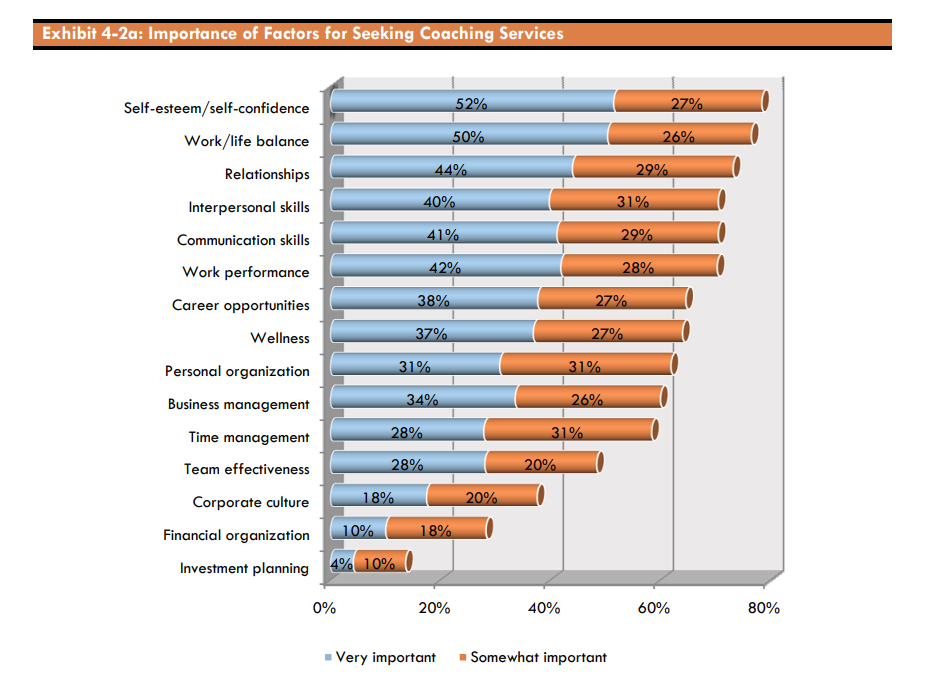
- High‑pressure roles demand rapid adaptation. Executive and coaching supports leaders in developing resilience, self‑awareness, emotional intelligence, and strategic thinking. Coaching enhances communication, interpersonal effectiveness, and stakeholder management, which are critical in competitive business environments.
- Coaching fills capability gaps that formal training often misses. Research on leadership development in the United Kingdom shows that coaching provides tailored, individualised growth pathways that traditional classroom training cannot replicate, making it a preferred choice for senior leaders seeking career impact.
- Confidential support accelerates learning. Leaders often lack safe environments to explore blind spots and strategic dilemmas. This is a core reason professionals engage coaches. A coach acts as an objective sounding board, helping leaders identify patterns, refine decision‑making, and align actions with organisational goals.
What is the main practical point? London executives who succeed in their careers use coaching services to develop their skills and improve their leadership abilities while learning how to manage complex situations in large organizations.
London’s unique pressure zones
International talent pools and cross‑cultural teams together with complex regulatory contexts create difficulties for leaders to handle their responsibilities. The 90‑day coaching cycle produces two outcomes which include clearer strategic focus and development plans that organizations can implement to achieve their business objectives.
“Most coaches offer a rushed, transactional chat. I do things differently: deep, strategic conversations designed to cut through noise, uncover patterns, and Create immediate clarity about what’s holding you back.” – Kasia Siwosz
Leaders in fast‑moving markets need to manage their strategic goals while they meet their performance objectives and handle their demanding evaluation process. Coaching develops self-awareness and stress management skills to support leaders in maintaining their mental health while they make decisions during difficult situations.
Coaching as private strategy lab, not performance review
The private leadership coach London environment enables leaders to reflect on their assessment process because it functions as a non‑formal performance evaluation tool which links to human resources evaluation procedures. Leaders conduct leadership assessment through studying their organizational record without facing any organizational assessment.
Future performance assessment which requires behaviour changes is the main focus of coaching while the past performance assessment is disregarded. Through the program leaders can test different methods while they define their problems and build their strategic decision making abilities.
Take adaptive learning over checklist evaluation. Coaches train leaders to develop self reflection skills along with emotional control abilities and long term learning capabilities because these skills enable leaders to adapt to complex situations while maintaining their performance standards.
Typical outcomes within 90 days
The leaders demonstrate improved comprehension of their personal strengths and weaknesses and their social interaction methods after an 8 to 12 week period which establishes a transformation that influences their future decision-making and interactions.
Coaching helps leaders develop their ability to communicate clearly and authoritatively which results in better stakeholder relationships and enhanced executive visibility. The first two months of this period show that leaders start to implement new methods which help them decide priorities and make choices that result in better productivity and delegation and problem-solving skills. Coaches who follow structured coaching programs show their clients strong early behavioral changes which will result in variables depending on the situation.
How Kasia Siwosz Brings Structure to High-Performance Growth
Peak performance requires more than exceptional talent. Kasia Siwosz develops her coaching method through evidence-based research which combines her athletic experience and banking work to help leaders manage complex situations. She creates a development program for high-potential executives through her method which combines quantitative performance metrics with cognitive science and personalized one-on-one guidance.
From athlete and banker to coach
Kasia's career path from sports competitor to banking worker to leadership coach brings together three fields of expertise which she uses to achieve professional performance improvement and business process efficiency and human behavior study.

In her own words:
You don’t need someone to teach you how to win; you’ve mastered that already. Coaching is about clarity, direction, and sustainable growth under pressure.” – Kasia Siwosz
The leadership coach London method developed from this interdisciplinary experience uses both performance data and cognitive assessment techniques to guide leadership development at the executive level. Kasia uses evidence-based diagnostics and measurable key performance indicators together with feedback loops to make high-performance growth practical rather than theoretical.
Her strategy turns hidden potential into concrete results which enable leaders to maintain their decision-making abilities throughout difficult times at work.
Evidence-led 1:1 model built for measurable outcomes
She uses a customized coaching system that depends on data analysis to deliver her primary coaching services. The client engagement process establishes particular behavioral and performance benchmarks which testing procedures will confirm through persistent feedback evaluation. The coaching model integrates: (a) leadership assessment for baseline evaluation of cognitive, emotional, and operational competencies; (b) goal specification for formulation of measurable targets aligned with organizational outcomes; (c) iterative adjustment: continuous refinement of strategies based on observed performance indicators.
90-Day framework: audit, cadence, results
Her time-bound oriental operational framework renders high performance growth a replicable cycle:
- Audit (Weeks 0-2): Comprehensive evaluation of current skill sets, decision patterns, and leadership efficacy.
- Cadence (Weeks 3-8): Implementation of structured sessions, exercises, and decision rehearsals, monitored against intermediate metrics.
- Results (Weeks 9-12): Quantitative and qualitative analysis of improvement trajectories, including behavioral shifts, team performance effects, and strategic clarity.
The framework shows that coaching needs to deliver operational results which senior leaders can use to get practical insights from the program while tracking actual behavior changes and protecting their organization through established security measures within a set time period.
Case Insight
High-performing leaders struggle with three challenges that include strategic bandwidth and team influence and executive presence despite their technical expertise. Leadership coach London programs deliver structured interventions that create observable changes in both behavior and performance results. The following examples illustrate before-and-after transformations observed among London-based executives, founders, and senior managers.
Coaching delivered measurable improvements in time management, strategic influence, and visible leadership impact within 90 days. The results show that even high achievers need structured assistance to increase their productivity in London's complex business environment. Read a blog on lessons from my first year as a coach.
How to Know You’re Ready for Leadership Coaching
The most effective coaching occurs when you demonstrate board readiness to complete structured reflection and work with specific feedback and develop distinct behavioral changes from your acquired knowledge. The signs which you identified and the questions which you can answer will help you achieve maximum coaching returns through guidance which improves your ability to influence without authority while maintaining your performance.
Signs you’re plateauing despite external success
You may be achieving results but still feel overwhelmed, stuck, or unclear about priorities. The organization shows high performer plateau through its repeated challenges and stalled strategic impact and its inability to expand leadership capacity. The combination of external success and internal confusion indicates that coaching will help us reach our next performance level.
Questions to assess readiness for coaching ROI
You must ask yourself whether you will spend time on promotion readiness and 1:1 meetings. Can I receive candid feedback and act on it? Do I have clear outcomes I want to achieve in the short term?People need my approval to make progress with their work but I prefer to see proof of their work progress. The answers I provide to this question will show whether coaching can produce actual benefits for me.
From Awareness to Action: Where to Begin
The initial step in leadership coaching begins with a brief 15-minute fit call. The session determines whether the leader and coach share a common purpose while identifying the leader's objectives and assessing the effectiveness of the coaching method for their specific situation. The session will provide an open examination of your leadership problems together with the coach's techniques and the expected results for your position.
Typical coaching cadence and confidentiality
Coaching begins with scheduled sessions which occur either weekly or bi-weekly for individual meetings that adapt to your personal timetable and your company's requirements. The sessions create a private environment which enables clients to discover hidden weaknesses while they practice testing their approaches and making difficult decisions without any fear of being evaluated by others.
How to measure ROI on your leadership growth
Coaching assessment needs both goal establishment and result measurement to evaluate its effectiveness. The assessment uses multiple metrics which evaluate restored strategic time and better decision velocity and increased team participation and visible confidence during critical situations. The systematic evaluation process guarantees that coaching delivers specific practical outcomes which extend beyond theoretical knowledge.
Summary — The Future Belongs to Deliberate Leaders
Your leadership coaching UK program establishes a protected environment for you to test your abilities and develop toward concrete objectives. Leaders experience significant improvements in three areas: their presence and their productivity and their ability to understand strategic goals. The results create professional advancement opportunities that help organizations succeed by removing hidden operational obstacles.
The process begins with a 15-minute fit call which will help us determine our mutual compatibility and establish our c suite transition objectives while demonstrating how evidence-based coaching methods will help you succeed as a leader in London's complicated business landscape.
References
- The effects of executive coaching on behaviors, attitudes, and personal characteristics: a meta-analysis of randomized control trial studies
- Perceived Effectiveness of Internal Executive Coaching Engagements by Participants in a High Potential Leadership Development Program
- Executive coaching effectiveness : a conceptual and empirical foundation