Altruistic Narcissism: When Help Hides Control

Do you think you are the only one who can repair things? Do you consider yourself a moral compass for others? These sentiments are typical among altruistic narcissists. Altruistic narcissism is a less common and more complicated kind of narcissism. They may mask their selfishness with acts of compassion, making it difficult for others to discern their motives.
Covert narcissism disguised as altruism can be extremely difficult to detect because the person's actions may look truly good. Recognising altruistic narcissist tendencies in yourself or others is critical for breaking unhealthy cycles and establishing healthy boundaries. Otherwise, it might result in emotional control in relationships.
Understanding Covert and Altruistic Narcissism
The two types of covert and altruistic narcissism exhibit across multiple medical assessments, which show their distinctive expression of narcissistic personality disorder. These people use "martyr" roles and unsolicited help and guilt-tripping as their methods to achieve control and validation while they pretend to be selfless.
The two groups show different behavioural patterns through their distinct ways of conducting themselves:
People should understand that not all acts of kindness which show selflessness stem from people who secretly possess narcissistic traits. The person who constantly uses their charitable deeds to attract attention while having validation seeking and admiration needs to seek professional help for their underlying problems.
What covert narcissism means
Covert narcissism meaning is characterized by hidden entitlement, fragile self-esteem, and a persistent need for validation that is expressed indirectly rather than through overt dominance. Unlike grandiose narcissism, it often presents as humility, self-sacrifice and resentment, or moral sensitivity, which makes the underlying self-focus harder to detect. Behaviours that appear considerate or restrained frequently serve to protect a vulnerable self-image rather than to support others.

Research indicates that individuals with covert narcissistic traits seek social rewards such as reassurance, loyalty, or moral superiority, but they pursue these outcomes through subtle, socially acceptable strategies rather than overt self-promotion [2]. Relationships may appear cooperative or emotionally deep, yet they often function transactionally: care, restraint, or “understanding” is offered with the unspoken expectation of recognition, compliance, or emotional indebtedness.
Because covert narcissism is disguised as altruism or apparent sensitivity, it is particularly difficult to identify in personal and organisational contexts. In workplaces, this pattern can manifest through indirect control strategies such as quiet martyrdom, excessive promises framed as self-sacrifice and resentment, or implied guilt when appreciation is not forthcoming. These behaviours allow influence and loyalty to be extracted without open displays of power, while preserving the individual’s image as reasonable, ethical, or unfairly overlooked.
How altruism can mask narcissistic patterns
Altruistic narcissism shows itself in acts of kindness or generosity. Nevertheless, these are actually self-serving as they are motivated by the presence of attention, influence, or even a glorified self-image.
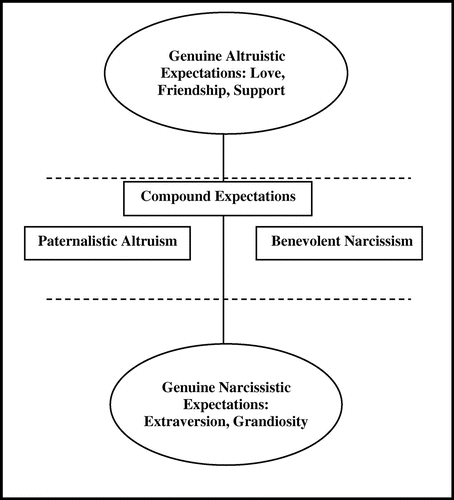
Research indicates that altruistic narcissists show a strong drive to obtain social rewards which they pursue through their conditional giving because they expect others to acknowledge them or show loyalty to them [2]. The people who appear to be caring and cooperative actually maintain relationships that function as business transactions because they use their generosity to manipulate others.
The way altruistic narcissists hide their narcissistic traits makes it harder for people to identify them. Organizations use this behavior to practice three different methods which include making excessive promises to provide assistance through conducting hidden manipulation and using goodwill to obtain employee loyalty and compliance.
Typical Behaviours of an Altruistic Narcissist
An altruistic narcissist often appears outwardly generous or selfless, as many clinical commentators categorise their mannerisms. Their giving is strategic, aimed at gaining admiration, control, or personal benefit rather than reflecting genuine concern.
This pattern involves conditional generosity, a persistent sense of being wronged when expectations aren’t met, and subtle behaviours that manipulate or invalidate others’ emotions. While these behaviours can initially seem prosocial, they serve to maintain self-esteem and influence, often leaving colleagues or friends feeling indebted, dismissed, or undermined.
Giving with strings attached
The initial impression of an altruistic narcissist's generosity appears to be either harmless or admirable. The main problem exists because the act of conditional giving to others never occurs as an unselfish act. The platform serves as a mechanism which helps them control how people view them while they obtain social standing. The following points explain this concept:
- Internal: Actions are motivated by a need for recognition, admiration, or validation rather than purely altruistic intent.
- External: Social or professional expectations reinforce conditional generosity; recipients may feel obliged or indebted.
It could be a colleague who pretends to be just helping a project but subtly expects recognition in public or a return favour.
Victim stance and growing resentment
Many altruistic narcissists develop a personal grievance because they believe others fail to understand their true value. Their interpretation of social situations and their developing bitterness toward others are both affected by this mindset. The following details:
- Internal: Self-narrative emphasises being wronged, underappreciated, or entitled to more; resentment accumulates when expectations are unmet.
- External: Feedback, perceived slights, or peer comparisons amplify feelings of injustice or unfair treatment.
The above case is illustrative: an employee could speak of unfairness in task sharing and workload allocation, feeling alone, and possibly overburdened compared to other colleagues.
Subtle control and emotional invalidation
These individuals use their power to control situations by directing their emotional narratives. The people who intervene in this way can create experience alterations for others while they build their own superiority. They work:
- Internally: Desire to protect fragile self-esteem and maintain a sense of superiority; habitual reframing of others’ emotions to manage discomfort.
- Externally: Organisational hierarchies or social dynamics provide opportunities to manipulate or influence others’ perceptions.
A bonding match could be formed as a means where words are spoken but views are aligned on values.
Impact on Relationships and Sense of Self
The presence of people who use manipulative or conditional behaviours creates danger to both relationship trust and personal mental health. From a Freudian perspective, these interactions can trigger ego vulnerability, projection, and repetition compulsion, producing self-doubt, over-identification with the other, and difficulty asserting personal needs [3].
The process of preventing boundary erosion together with self-reflection and drive identification will help people better manage their internal and external pressures. See in detail:
An informed approach recognises that relational difficulties are often reinforced by unconscious mechanisms in both parties. The process requires people to actively manage their mental and emotional states while protecting themselves from covert abuse patterns.
Self-doubt and confusion
The interactions with an altruistic narcissist become confusing and self-doubtful because their actions disrupt your ability to see things as they actually are. Altruistic narcissists show themselves as people who care and help others while they actually use these qualities to control their victims. The person provides help and advice to others with hidden needs while conditionally giving them partial support and showing their anger through false concern.
The situation develops into ongoing internal conflict which causes you to doubt the authenticity of your emotions and essential needs and actual perceptions.
Difficulty trusting your own needs
The relational pattern between people creates an outcome which makes it difficult for you to trust your genuine requirements. The way an altruistic narcissist treats your requests and desires and emotions leads you to question your own judgement. Internal conflict arises when simple basic needs trigger a battle between two thoughts: "Am I being selfish? Am I overreacting?"
Freudian theory describes this phenomenon through his concept of the divided self, which shows how outside forces interact with manipulative behaviour to produce nonstop internal doubt and guilt. The person faces challenges to identify their fundamental needs, which results in decision-making difficulties that create dependency on others for decision approval while creating permanent insecurity, which results in their ability to be controlled.
Working with These Dynamics in Coaching
Relationships with altruistic narcissists and covert narcissists create difficulty because people experience confusion and guilt and self-doubt which remain after they attempt to understand themselves.

Kasia Siwosz guides clients through the process of recognising relationship dynamics which impact their ability to make decisions and manage their emotions and interact with others.
Coaching for complex relationships uses structured dialogue and reflective exercises to help clients identify their patterns and differentiate between their self-doubt and actual experiences and to develop better self-awareness.
How Kasia Siwosz supports clarity and boundaries
Kasia’s approach assists clients in defining their requirements while helping them recognise their limits and prevent boundary erosion which maintain both assertiveness and respectfulness.
The project requires the creation of scripts which will guide clients through challenging discussions together with self-validation exercises and emotional response tracking tools which enable clients to differentiate between internal and external pressure. The process of recovery of self-trust requires assessment of relationship patterns which demonstrate how historical experiences shape present-day social interactions.
First steps to reclaim your voice
Begin to gain confidence and focus again with Kasia Siwosz coaching through these practical steps:
- Identify areas of self-doubt: Map situations where over-accommodation or confusion arises.
- Validate your feelings: Acknowledge your needs and emotional responses without judgement.
- Learn to spot manipulation: Recognise subtle tactics that undermine your voice.
- The recovery of self-trust: Use journaling, role-play, and cognitive reframing to build confidence.
- Set small, actionable boundaries: Practise assertive communication in safe, controlled steps.
- Take decisive actions: Apply your insights in daily interactions to reclaim authority over decisions.
- Build long-term resilience: Gradually transform confusion into clarity and personal autonomy.
Do you want to reclaim your voice and create strong personal boundaries? Book a chemistry session with Kasia Siwosz today to begin your path toward clear understanding and self-assurance.
FAQs
What is an altruistic narcissist?
An altruistic narcissist appears selfless and helpful but primarily seeks admiration and validation through their perceived people-pleasing.
How is covert narcissism different from classic narcissism?
Covert narcissism meaning manifests subtly through passive-aggression, self-victimisation, and hidden entitlement, rather than overt grandiosity.
What are common signs of altruistic narcissism in relationships?
Signs include excessive need for praise, emotional control disguised as concern, and undermining others while presenting as caring.
Why can covert narcissism be hard to recognise?
Its subtlety, charm, and feigned empathy obscure manipulative patterns and distort the observer’s perception of intent.
How does altruistic narcissism affect partners and colleagues?
Altruistic narcissism fosters self-doubt, emotional exhaustion, and confusion about personal needs due to projection and constant evaluation.
How can you set boundaries with an altruistic narcissist?
Clearly define your limits, consistently enforce them, and detach emotionally from attempts to guilt or control you.
When should you seek professional support about narcissistic dynamics?
When the relationship consistently erodes your mental health, confidence, or ability to maintain autonomy.
References
- The Relationship between Grandiose and Vulnerable (Hypersensitive) Narcissism
- Towards integration of communal narcissism within the structure of the narcissistic personality traits
- Empathy, caring and compassion: Toward a Freudian critique of nursing work