How to Deal with Toxic Family Dynamics

Mothers, dads, siblings, and other close family members may provide you with a lifetime of social support. They can help you celebrate your successes and console you when you're down. Disputes and misunderstandings will always arise in family dynamics. Minor arguments between family members are common and usually dissolve on their own.
However, some disputes can be far more severe. When anger and destructive habits emerge, family interactions can become long-term causes of irritation, tearing ties apart.
Toxic family members look all differently. You may have an extremely critical father who makes you feel nervous. Maybe a sibling's envy is a continuous cause of conflict at family gatherings. Perhaps you feel a new in-law's dominating style creates unneeded drama.
What Makes a Family Environment Toxic
The American Psychological Association describes a toxic (dysfunctional) family as one in which connections and communication are strained, and individuals are unable to achieve intimacy and self-expression [1]. However, this term can be expanded.
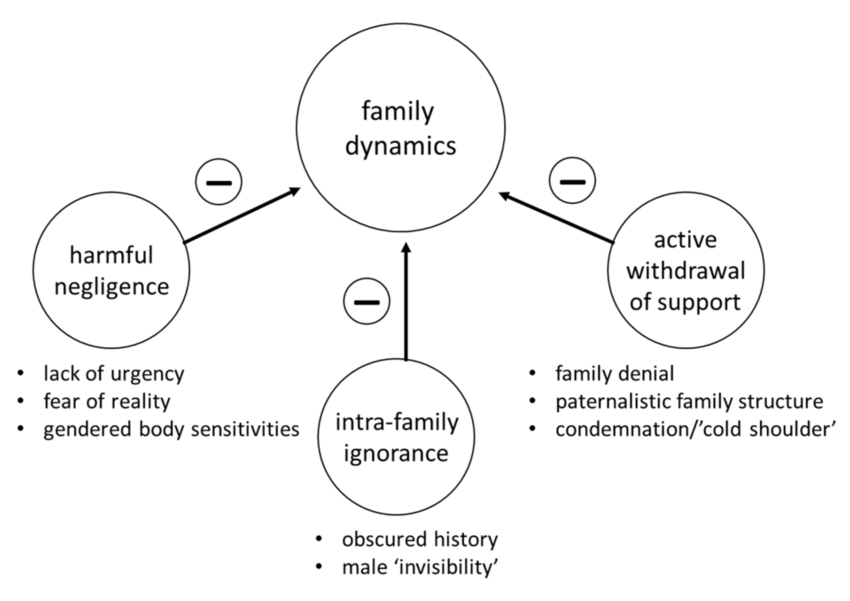
A toxic family is one in which certain recurring actions harm its members and negatively impact their well-being. These may include continual criticism, control, guilt-tripping, emotional or physical abuse, name-calling, unreasonable expectations, and frequent confrontations.
Instead of meeting fundamental requirements, offering emotional support, and fostering closeness (as in a healthy family structure), a toxic family is negative. This environment develops people into dysfunctional roles, which might keep them bound in set behavioural patterns.
While abuse is more blatant and can cause physical or serious psychological injury, poison is less visible but nevertheless persistent. After some time, a person living in a toxic household may experience significant emotional consequences comparable to those induced by abuse. So, how to deal with toxic family members?
Patterns that damage emotional safety
Toxic family members may carry down behavioural habits from generation to generation, making them appear "normal" and difficult to identify. However, there are certain trends you might notice:
- Conditional love or approval: Affection and praise are given only when members meet specific expectations or perform well.
- Frequent denial or minimisation of emotional harm: Emotional pain or loyalty conflicts are ignored, dismissed, or labelled as overreactions.
- Unpredictable or violent reactions to expression of needs: Requests or boundaries trigger anger, aggression, or sudden withdrawal.
The combination of unpredictable reactions and violent reactions creates fear because people use triangulation to manipulate others, which results in broken trust and disrupted genuine communication.
The organisation requires its members to hide their authentic feelings because they must maintain a perfect family image instead of being their actual selves. Studies show that such patterns contribute to anxiety and difficulties forming secure relationships later [2].
Common roles in toxic families
The toxic dynamics of the situation create recurring roles which enable the system to operate. However, these roles prevent people from developing their emotions and showing their true selves.
- The Dictator: Takes charge of decisions, enforces rules, and strips others of agency. Others learn to suppress desires or opinions.
- The Scapegoat: Blamed for problems that are systemic; internalises guilt and obligation, diminishing self‑worth.
- The Golden Child: Idealised for success or performance; conditional affection reinforces self‑worth tied to achievement.
Research shows that these adaptive roles from childhood create permanent identity boundary setting or emotional resilience problems for individuals who use these roles [3]. The first step of healing includes recognising patterns and roles, which leads to recovering genuine self-expression.
Recognising Toxic Family Members
Toxic family members from a dysfunctional family spend their time through three main activities. They practise emotional abuse patterns, which creates reactive responses in their victims. They maintain constant control over all aspects of their lives. Their actions create loyalty conflicts to separate all family members from one another.
Unhealthy families discourage individual expression. The toxic parents of the family demand that all family members must adopt their beliefs and follow their ways. The family system creates fusion, which results in shared boundaries between its members.
Repeated disrespect of boundaries
When family members repeatedly ignore your limits, enter private space, pressure you about choices, or dismiss “no” as negotiable, that pattern is a reliable marker of toxicity because it trains you to expect violation and to suppress needs. Long-term, this increases anxiety, hypervigilance, and risk of estrangement [4].
Guilt, blame and control
The behaviour of toxic relatives creates family control through their use of guilt and their ability to shift blame and their implementation of coercive control methods that include triangulation. The equipment functions by making users accountable for the results and emotions of others because this system leads to a quick loss of personal independence and self-confidence.
You should inform your family members about your requirements yet you should prepare for their potential refusal to alter their behaviour. The evidence-based approach of reducing contact or executing no-contact decisions provides people with an effective method to reclaim their stability when harmful situations continue to exist.
Protecting Yourself Around Toxic Relatives
How to deal with toxic family members? The dealing with toxic family members proves difficult for most people, while some find it even harder to implement. The process of terminating contact with a living family member creates complex emotional pain for the person making the decision. If you have reached the stage where your relationship with specific family members has become unmanageable, then you need to establish strict boundaries and acquire new coping skills to protect yourself from further damage.
Your life belongs to you because you are the only person who has the right to control it. People who have harmed you in the past should not have the right to access you because they pose danger to your psychological safety. Your decision to stop all contact with toxic family members shows that you have chosen to practise self-love.
Practical boundary strategies
The process of dealing with toxic family members requires individuals to first determine their personal boundaries and then identify which interactions and subjects and specific behaviours will create discomfort and exhaustion and make them feel unsafe.
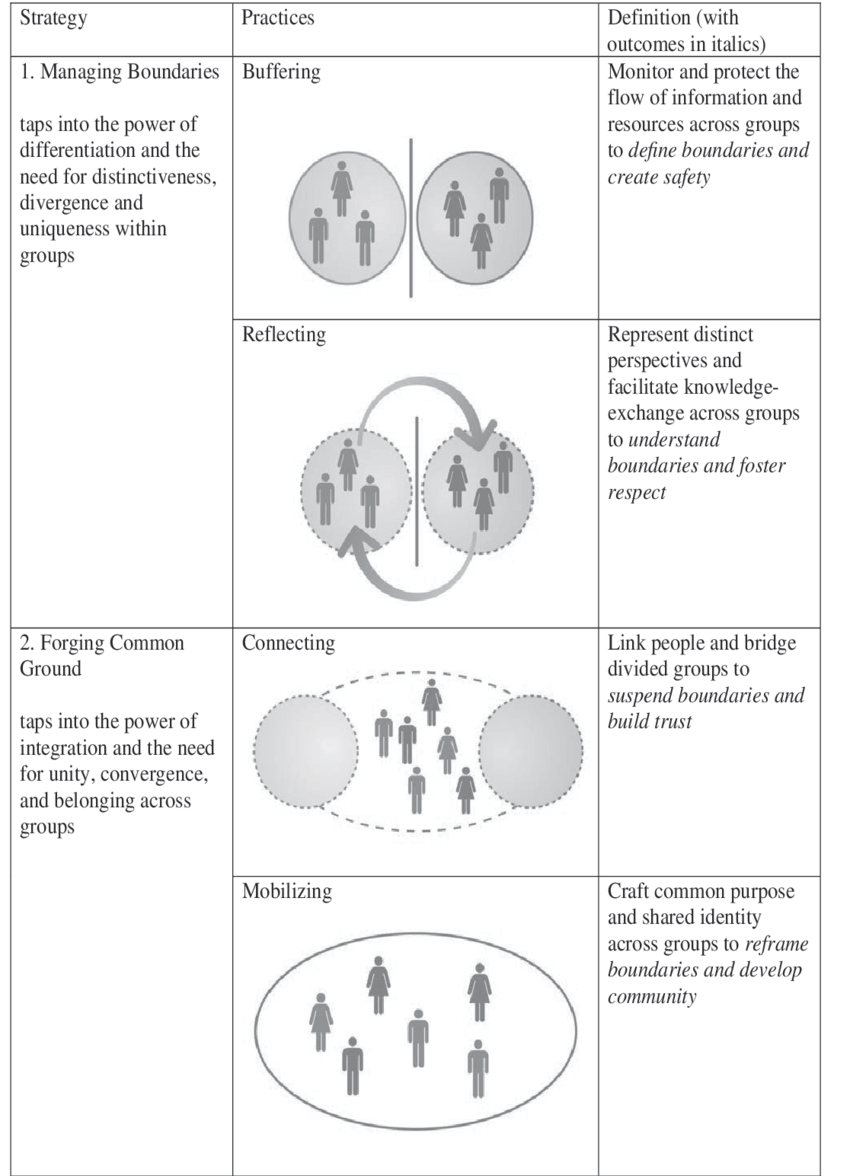
You should only interact with others to your preferred level while maintaining control over your emotional state and using physical distance to protect yourself from people who use manipulative tactics or create distressing situations. The emotional space needed for safe participation can be achieved through low-contact strategies which involve decreasing contact times and meeting schedules and selecting neutral areas for interactions.
Planning low-contact or distance
When you don't enjoy seeing your family, or when any interaction elicits only unpleasant emotions, it may be time to explore whether taking a break may help improve the situation.
If you think thoughts like, "Why am I putting myself through this? Do I need to see them?" Remember that you are under no obligation to visit them or go through anything you do not want to. Importantly:
- You have the right to prioritise your well‑being and decline interactions that feel harmful.
- Temporary distance can help you regain clarity and emotional balance without committing to a permanent cutoff.
- Setting limits allows you to choose how and when to engage, empowering you to maintain control over your boundaries.
Cutting off touch does not have to be a permanent decision. You could just need some time away from the issue.
Using Coaching to Navigate Family Stress
The family experiences stress because of their toxic relationships, which create confusion and self-doubt and reactivity and repeated role patterns that exhaust their energy and hinder their ability to make decisions. The coaching for boundary work offers you a neutral and practical space where you can transform your personal experiences into precise problem definitions.

You can implement strategic work which focuses on achieving results while minimising harm and restoring your ability to choose. The objective is to reduce toxic exposure while you maintain your energy and restore your ability to make choices that align with your values.
How Kasia Siwosz supports clients with family dynamics
Kasia Siwosz combines insight into family being with useful coaching tools so clients gain both understanding and action steps. Key techniques for dealing with toxic family members are complied with:
- Relational mapping: Visualising roles and dynamics in your family.
- Boundary setting: Creating and practising clear, repeatable lines to protect your limits.
- Values-focused action: Identifying core values and testing small, safe changes in interactions.
- Decision framework: simple guidelines for limiting contact or taking distance when needed.
These methods provide clear and secure solutions together with independent functions that deliver precise operational instructions to clients instead of delivering general guidance.
Refocusing on your values and next steps
Dealing with toxic family members via coaching helps people create new self-narratives that exist beyond their family responsibilities. I guide clients who need to transform their values into actual next steps. Dignity serves as the primary value that leads to subsequent actions which result in decreased invasive enquiries through a predefined script. You should track your boundary setting throughout the week and assess your emotional reactions afterwards.
People who require organisation can choose my specific coaching services, which start with a relationship framework and two sessions that teach participants to establish and test their self-protection and proceed to brief meetings that help them improve their low-contact strategies.
Book a chemistry session. Receive a plan which includes a script for your first session.
FAQs
What does a toxic family mean?
A family where behaviours consistently harm emotional, mental, or physical well‑being.
How can you recognise toxic behaviour in family members?
Look for manipulation, emotional abuse patterns, boundary violations, excessive control, or constant criticism.
Is it okay to limit contact with toxic relatives?
Yes. Reducing exposure to toxic relatives can protect your emotional health.
How do you set boundaries with toxic family members?
Clearly state your limits, be consistent, and enforce them without guilt and obligation.
How can you protect your mental health around a toxic family?
Use detachment, plan interactions, control what you share, and seek support from friends or professionals.
Can coaching help you navigate toxic family dynamics?
Yes. Coaching can clarify patterns, strengthen boundaries, and build strategies for healthier interactions in family dynamics.
What is the difference between normal conflict and toxicity in families?
Normal conflict is occasional and resolvable; toxicity is persistent, harmful, and erodes self‑worth over time.
References
- APA Dictionary of Psychology
- Dysfunctional Family Mechanisms, Internalized Parental Values, and Work Addiction: A Qualitative Study
- How parentification relates to obsessive-compulsive disorder (OCD) and relationship obsessive-compulsive disorder (ROCD): the mediating role of obsessive beliefs
- From family estrangement to empowered exits: new emotional developments