What Is Emotional Safety — And How to Build It | Kasia Siwosz

Understanding emotional safety is the first step toward learning how to feel safe emotionally. It is a foundational component of our mental health and a basic human need that allows us to build authentic connections and thrive. When we feel emotionally safe, we can be our true selves without fear of judgment or harm, creating a space for genuine vulnerability and growth. This article explores what it means to be emotionally safe and provides practical steps to cultivate it in your life.
Key Takeaways
- Emotional safety is the feeling of being able to express yourself without fear.
- It is a basic human need and crucial for mental health.
- Cultivating emotional safety is an active process of building trust and security.
What Emotional Safety Means
Emotional safety is the bedrock of healthy relationships and a core component of personal well-being. It is the invisible shield that allows us to be vulnerable and connect deeply with others. Without it, we may feel isolated, anxious, and misunderstood. True emotional security comes from consistently feeling safe and valued in our interactions.
Emotional safety definition
Emotional safety is an environment where you feel secure enough to express your feelings, thoughts, and needs without fear of negative consequences. According to Psychology Today, it is the visceral feeling of being accepted for who you are [1]. This sense of security is vital for building trust and fostering intimacy in any relationship, whether personal or professional.
Emotional security meaning
The American Psychological Association (APA) defines emotional security as a feeling of safety, confidence, and freedom from apprehension [2]. It is the internal state that results from consistent experiences of emotional safety. When you have emotional security, you feel grounded and resilient, capable of navigating life's challenges without losing your sense of self-worth.
Signs You Feel Emotionally Safe
Recognizing the signs of an emotionally safe environment can help you identify healthy relationships and workplaces. When you feel comfortable and valued, you are more likely to thrive. Here are some key indicators that you are in an emotionally safe space:
- Open Communication: You can express your thoughts and feelings without fear of ridicule or punishment.
- Trust and Respect: You feel that your boundaries are respected and that you can trust others to have your best interests at heart.
- Vulnerability is Welcomed: You can be your authentic self, imperfections and all, without feeling the need to hide parts of who you are.
- Conflict Leads to Growth: Disagreements are handled constructively, with a focus on repair and understanding rather than blame.

Key Takeaways
- Open communication without fear is a primary sign of emotional safety.
- Mutual trust and respect are essential for feeling secure.
- In safe environments, conflict is an opportunity for growth, not a threat.
Why Emotional Safety Breaks Down
Emotional safety is delicate and can be easily damaged by negative patterns of behavior. Understanding what causes this breakdown is the first step toward rebuilding a sense of security. Often, the erosion of safety is a slow process, resulting from repeated instances of invalidation and disrespect.
Emotional invalidation patterns
Emotional invalidation occurs when someone's feelings are dismissed, ignored, or judged. This can include statements like "you're being too sensitive" or more subtle actions like changing the subject when you try to express yourself. Over time, these patterns can lead to self-doubt and a profound sense of loneliness.
Boundary problems
Boundaries are the limits we set to protect our emotional well-being. When these boundaries are repeatedly crossed or ignored, it sends a clear message that our feelings and needs do not matter. This is a common issue in both personal relationships and in the workplace, where a lack of a safe workplace culture can lead to burnout and disengagement.

How to Feel Safe Emotionally
Building emotional safety is an active process that requires both self-awareness and intentional action. It involves learning new communication skills and being willing to advocate for your own needs. Here is a numbered process for how to have a difficult conversation to build emotional safety:
- Set the Stage: Choose a time and place where you can speak privately without interruptions. Start by expressing your intention to have a constructive conversation.
- Use "I" Statements: Express your feelings from your own perspective, such as "I feel hurt when..." This avoids blaming the other person and keeps the focus on your experience.
- Practice Active Listening: Give the other person your full attention. Listen to understand their perspective, rather than just waiting for your turn to speak.
- Seek a Resolution: Work together to find a solution that respects both of your needs. This may involve compromise and a commitment to change.
"Emotional safety is not about avoiding conflict, but about knowing you can navigate it together and come out stronger. It's about feeling seen, heard, and valued, even when you disagree." - Kasia Siwosz, Leadership & Emotional Safety Coach
Emotional Safety at Work
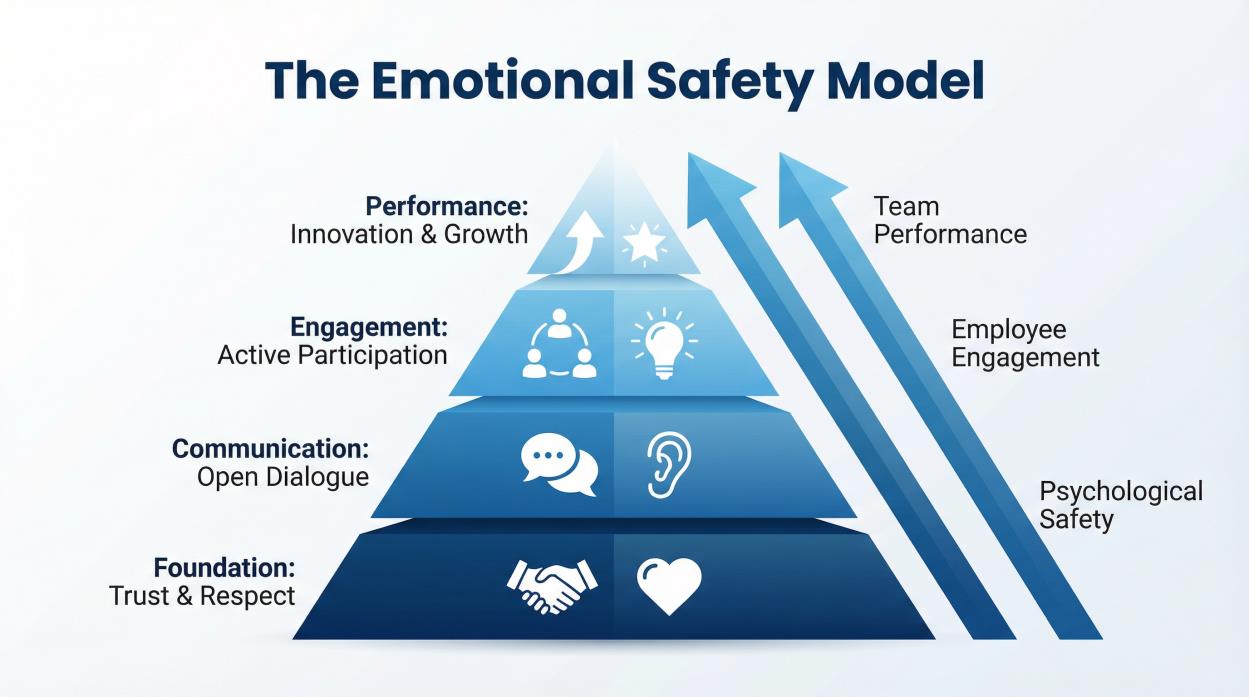
A safe workplace is one where employees feel empowered to speak up, share ideas, and take calculated risks without fear of negative repercussions. The NHS emphasizes that psychological safety is crucial for a healthy work environment and for preventing burnout [3]. When employees feel valued and respected, they are more engaged and innovative.
Safe workplace behaviours
Creating an emotionally safe workplace requires a commitment from everyone, especially leadership. Here are some behaviors that contribute to a safety work culture:
- Leaders Model Vulnerability: When leaders admit their own mistakes and are open about their challenges, it creates a culture where it is safe for others to do the same.
- Feedback is Encouraged: There are clear, respectful processes for giving and receiving feedback at all levels of the organization.
- Inclusivity is a Priority: Everyone feels a sense of belonging and is treated with fairness and respect, regardless of their role or background.
Coaching vs. Therapy for Emotional Safety
Both coaching and therapy can be valuable for improving emotional safety, but they serve different purposes. Understanding the distinction can help you choose the right support for your needs.
At its core, coaching with Kasia Siwosz is designed to give you the practical tools to build emotional security in your daily life. It is a proactive approach that empowers you to make tangible changes in your relationships and career, fostering a deep sense of confidence and self-trust. If you are ready to take control of your emotional well-being, explore our Coaching services.
FAQ
What is emotional safety?
Emotional safety is a state where you feel secure enough to express your emotions and be vulnerable without fearing negative consequences. It is a fundamental aspect of mental health and a basic human need for building trust and connection in relationships.
How do you feel safe emotionally with someone new?
Building emotional safety with someone new involves taking small steps to be vulnerable and observing their response. Start by sharing something personal but not overly sensitive, and see how they react. A safe person will listen with empathy and without judgment. It's also important to pay attention to your intuition and how you feel comfortable in their presence.
What are signs you are not emotionally safe at work?
Signs of an emotionally unsafe workplace include a fear of speaking up or sharing ideas, a culture of blame and criticism, a lack of trust among colleagues, and a high level of gossip and office politics. If you feel you have to hide your true self or are constantly on guard, it is likely that you are not in an emotionally safe environment.
What can you say when you do not feel emotionally safe?
When you don't feel emotionally safe, you can use "I" statements to express your feelings without blaming the other person. For example, you could say, "I feel uncomfortable when..." or "I need..." It's also important to set boundaries and, if necessary, remove yourself from the situation. If you need support, consider reaching out to a trusted friend, family member, or a professional coach or therapist.
How do you build emotional security without controlling other people?
Building emotional security is an inside job. It comes from developing self-awareness, practicing self-compassion, and learning to meet your own needs. It's about taking responsibility for your own feelings and well-being, rather than trying to control the behavior of others. A coach can help you develop the skills and mindset to build a strong sense of emotional security from within.
How can coaching help you improve emotional safety?
Coaching provides a supportive and non-judgmental space to explore your emotional patterns and develop new skills. A coach can help you identify the root causes of your feelings of insecurity, practice new ways of communicating, and build the confidence to create healthier, more secure relationships. For more information, you can Contact Kasia.
When is therapy more appropriate than coaching for emotional safety?
While coaching can be very effective for improving emotional safety, therapy may be more appropriate if you are dealing with deep-seated trauma, severe anxiety or depression, or other mental health challenges. A therapist can provide a clinical diagnosis and treatment, while a coach focuses on helping you achieve your personal and professional goals. If you are unsure which is right for you, it is always best to consult with a mental health professional.
References
[1] Psychology Today: Emotional Safety
[2] APA Dictionary of Psychology: Emotional Security
[3] NHS Horizons: Psychological Safety