What Authenticity Really Means in Modern Life

Given the numerous demands to conform in some contexts, many of us discover that we aren't always as authentic as we may be, preferring instead to adopt many of our peers' attitudes or ideas without regard for what we truly want or feel. After a time, it might be difficult to distinguish between our 'real' selves and what society, our friends, or our workplace culture are pressuring us to accept and become. This can impede us from truly connecting with people and undermines our confidence and self-trust.
What is authenticity? I will look at what it is, why it is vital, and why we still conceal it. It is also important to discuss several methods that allow us to express emotional honesty.
Defining Authenticity Beyond Buzzwords
People achieve authentic existence through their continuous effort to match their core values and beliefs with their life obligations and their authentic interaction with others. The process of authentic living requires people to make intentional choices based on their personal values, which guide their behaviour towards fulfilling their life commitments.
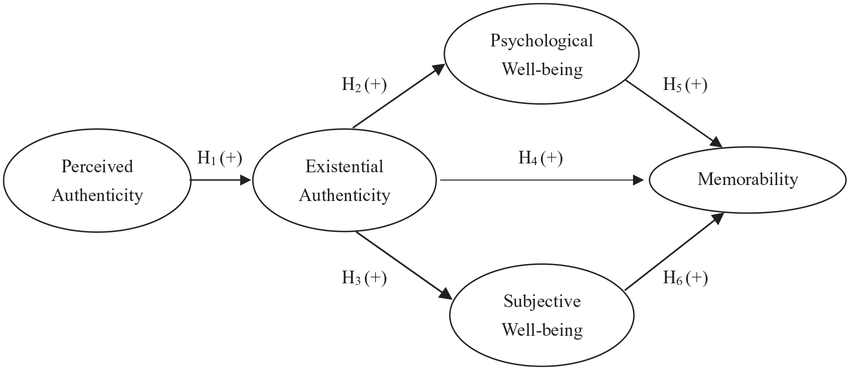
Research demonstrates that authenticity establishes a connection with wellbeing and autonomy and life meaning, which develops through self-acceptance and deliberate decision-making instead of following social norms [1].
To define authenticity, we use these means:
- Owning your choices and values: Acting in ways that reflect your true priorities and commitments, rather than simply conforming to social expectations or external pressures – a concept rooted in existential thought about being responsible for one’s own life (refer to Heidegger or Sartre).
- Having a congruence internally and relationally: Aligning your behaviour with your self‑understanding and expressing this honestly in relationships, so that what you do matches what you believe and how you want to relate to others.
A person who has mastered values alignment must maintain their equilibrium while acknowledging all existing complexities. The practice of authenticity enables people to make intentional decisions when their life experiences become unbalanced.
Key elements of being authentic
The definition of authenticity requires people to take charge of their decisions while they keep their personal values intact. Answering the question of what is authenticity requires people to take charge of their decisions while they keep their personal values intact.
- Self-compassion allows individuals to accept imperfections without self-judgement, making authenticity sustainable rather than performative.
- Reflective openness encourages continuous learning from experiences, helping one adjust behaviours without compromising core values.
- Relational discernment means selectively sharing and expressing aspects of the self in ways that preserve integrity while respecting context and others’ boundaries.
The elements work together to present authenticity as a dynamic practice which requires people to live according to their values while choosing their actions and handling social complexities through honest conduct.
Myths about authenticity
People misinterpret authenticity because they think it means acting on their impulses while pursuing their own needs and maintaining a strict approach to life and achieving perfection and showing their inner thoughts at all times.
People define authenticity through a complex system which demands them to express themselves while understanding their situation and their social connections. Here is how professionals mistake a sense of being authentic:
Note: This is a characteristic shared by the most real people I've ever encountered. They care about me as a human being and individual. Everyone knows someone who solely cares about themselves. When you're around them, all they speak about is themselves. When they listen to you, it appears that it is a task or responsibility that they must endure until they can refocus on themselves. Have you ever had an incident like that in your life?
Why Authenticity Feels Risky
In predictive processing theory, the brain functions as a hierarchical system that generates predictions about incoming data based on its previous knowledge and internal models. The brain generates predictions that travel from higher brain areas to lower sensory areas, which create expectations about upcoming sensory experiences.
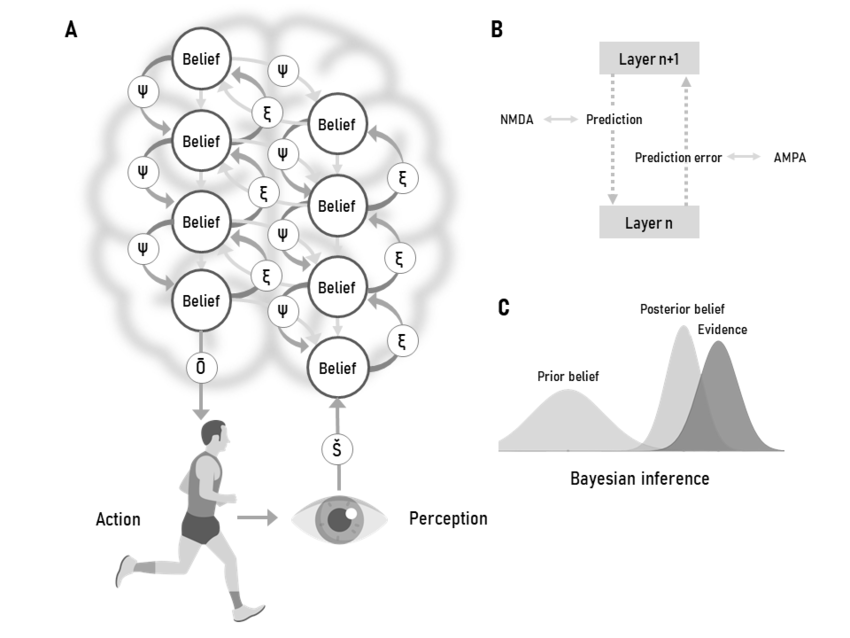
The brain processes actual sensory input by matching it to existing predictions and when there is a mismatch between the two results, the system generates bottom-up prediction errors which transmit back through the hierarchical structure to update the brain's world model. The brain uses this ongoing process to understand complicated situations while decreasing unexpected events throughout the day [2].
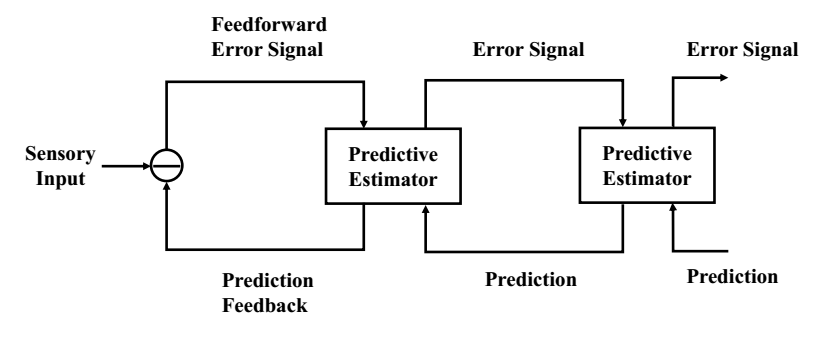
Andy Clark presents his theory through his research on the predictive brain, which establishes this principle as the main cognitive organising principle that governs human perception and social behaviour and human action execution [3].
The brain uses top-down predictions to create its most accurate understanding of reality, which it updates through bottom-up prediction errors that provide new information. The researchers are connecting our expected outcomes to our actual experiences. The brain develops social discomfort through authentic experiences which create prediction errors that force it to adjust its mental models.
Fear of judgement and rejection
People find it difficult to show their true identity because they do not understand how to achieve their goal of authentic self-expression. The need to belong exists because our survival instincts create this drive. Yet, when people show behaviour that goes beyond their organisation or peer group boundaries, they face actual costs.
The fear of losing everything stops us from showing our real selves because we believe our true selves will bring us greater benefits. People choose to change their identity because they want to protect their professional standing and personal reputation and psychological safety and any other important elements which might affect their situation. People find it easier and safer to hide their authentic emotions and thoughts and character.
People who know us better than our friends and coworkers will engage with us through our public image, which we use to interact with the world.
People-pleasing patterns
The people-pleasing approach leads individuals to modify their behaviour and their beliefs and their decision-making process so they can meet social norms, which helps to create better relationships and avoid conflicts. The first benefit of conformity helps people work together, while the second advantage of it helps people keep social stability. The excessive need for conformity makes people lose their ability to express themselves because it prevents them from asking questions and sharing their beliefs and creates a need for outside approval, which causes a loss of self-assurance.
People who always seek to please others find it hard to make decisions and lose their ability to develop real relationships with their work teams , reducing vulnerability. People must find a middle ground between two extremes because they need to use social rules to suit their surroundings while they work for their individual needs and their values. People maintain social relationships and mental health stability through this method.
Benefits of Living More Authentically
It's not hard to see the benefits of genuinely understanding ourselves and living on our own terms. Not only are we more likely to have higher self-efficacy, less vulnerability, and earn the respect of others, but we are also better equipped to reach our full potential and reap the benefits.
Here are a few additional ways authenticity might help:
Mental health and resilience
When you act in ways that reflect your true priorities, the brain experiences fewer prediction errors in social and personal interactions, reducing anxiety and internal friction. The practice of aligning your actions with your values develops psychological resilience because it helps you handle stress while maintaining your identity during times of external pressure [4].
Better relationships and work fit
Authenticity communicates reliability and clarity to others, which strengthens interpersonal trust. It enables leaders and team members to connect with each other in professional environments because it helps them build trust while working together and prevents misunderstandings. When your professional role aligns with your core identity, you’re more likely to experience engagement and fulfilment, which contributes to long-term career satisfaction [5].
Building Authenticity with Coaching
Being authentic for leaders establishes genuine behaviour through their own actions, which leads to their team members developing trust and loyalty toward them. To start living more authentically, it’s essential to become aware of how you actively counter your authentic self and then begin to cultivate a deeper self-acceptance and courage.
Here are some tips and practices to discover and develop authenticity:
- Be aware of what you’re suppressing (and why): Is there a part of you that you are not honouring? Interests or passions you are neglecting? True thoughts or feelings you are hiding? What excuses are you using for denying these parts of yourself?
- Be aware of what you’re projecting (and why): Are there mannerisms you are projecting that feel unnatural to you? Are there beliefs you have adopted solely because your group shares them? Are you a part of something you don’t completely agree with? Can you begin to let go of those things that aren’t authentically you?
Next step: Leadership coaching in Central London provides structured guidance through its reflection process, which allows you to examine your patterns while discovering hidden weaknesses and developing effective methods to achieve your true self.
How Kasia Siwosz works with clients on authenticity
Kasia Siwosz assists leaders in discovering their fundamental values and driving forces and authenticity patterns which help them connect their present identity to their desired future state.

Through executive confidence coaching, leaders learn to recognise their authentic self-betrayal points which occur during their decision-making and communication and role execution processes and they create practical methods to connect their everyday actions with their authentic identity.
Small experiments to practise authenticity
Being authentic can only be achieved through continuous practice. You can investigate your personal experience of value-based behaviour and authentic thought self-expression and priority-based boundary establishment through small deliberate experiments. The following steps will lead to your freedom:
- Notice suppressed feelings: Identify moments when you’re holding back thoughts, ideas, or emotions.
- Express small truths: Share a genuine opinion or perspective in a safe setting.
- Align actions with values: Choose one task or decision each day that reflects your priorities.
- Set boundaries: Say no to tasks or requests that conflict with your core priorities.
- Seek feedback: Ask a trusted colleague how your behaviour aligns with your stated values.
- Reflect and iterate: Review daily or weekly moments of values alignment or compromise to spot patterns and reinforce learning.
Follow your interests. Contact Kasia. See where they lead. You may start a pastime that allows you to express your unique creativity or go into a job that is far more suited to your genuine nature than the one you're currently in.
The more we pursue curiosity, the more real our lives become.
FAQs
What does authenticity mean in everyday life?
Authenticity is living in alignment with your values, beliefs, and true self while expressing this honestly in relationships.
Why is being authentic difficult at work?
Work pressures, social expectations, and fear of judgment can make expressing your true self feel risky.
How do I know if I am being authentic or people-pleasing?
Notice whether your choices reflect your own values or are primarily aimed at gaining approval from others.
Can authenticity be developed through practice?
Yes, intentional reflection, small experiments, and conscious values alignment strengthen authentic behaviour over time.
How does authenticity relate to personal boundaries?
Authenticity involves clearly defining and maintaining limits that reflect what you are truly willing and able to do.
How can coaching help you become more authentic?
Coaching provides structured reflection, feedback, and strategies to clarify your values and practise authentic self-expression safely.
Is authenticity always the best approach in professional settings?
Authenticity is valuable when balanced with situational awareness and respect for others, not as a licence for impulsive or inconsiderate behaviour.
References
- From ‘Know thyself!’ to ‘Be your true self’: free will belief as a mediator in the relationship between internal state awareness, appearance consciousness, style consciousness, and social anxiety with authenticity
- Predictive coding: a more cognitive process than we thought?
- Whatever next? Predictive brains, situated agents, and the future of cognitive science
- The authentic worker's well-being and performance: the relationship between authenticity at work, well-being, and work outcomes
- Perceived leader concern, employee authentic self-expression, and self-concept-job fit