Emotional Invalidation: When Your Feelings Are Dismissed

In any connection, we want to be heard, seen, and understood. When we disclose something sensitive about our relationship and they respond with presence and concern, trust grows. However, when our invalidating feelings are discarded, ridiculed, or ignored, something within begins to shut down.
This is known as emotional invalidation, and it is one of the most prevalent, yet often missed, causes of alienation in relationships. It is frequently subtle, inadvertent, and easy to overlook. However, over time, invalidation erodes emotional safety and builds distance between spouses.
What Emotional Invalidation Means
Emotional invalidation is the rejection or dismissing of a person's thoughts, sentiments, emotions, or behaviours as valid and comprehensible. If a person feels emotional neglect, it leads to the perception that their subjective emotional experiences are unsatisfactory or insignificant.
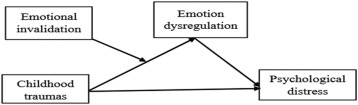
Invalidation may have an influence on anybody, regardless of age, gender, or culture, but children are especially vulnerable because their awareness and comprehension of the world, like their brain and nervous system, are still developing.
The signs of emotional invalidation undermines one's sense of existence and self-worth, causing emotions of rage, humiliation, guilt, and worthlessness. Such emotions can have a severe influence on an individual's daily functioning and lead to psychological health issues.
Everyday examples of invalidating responses
People do not realise that their spoken words and their actions lead to invalidation of others. Invalidators believe that their actions will help others who are experiencing difficult emotions to recover from their struggles [1]. Some people understand their gaslighting tendencies create invalidation yet they choose to use these patterns for the purpose of harming others.
Examples include:
- Dismissing emotions: Saying “you’re overreacting” or “it’s not a big deal” when someone is upset, which teaches them to question whether their feelings are legitimate rather than understandable.
- Ignoring or deflecting emotional expression: Changing the subject, staying silent, or focusing only on solutions when someone shares distress, subtly communicating that emotions are inconvenient or unwelcome.
- Punishing vulnerability: Responding to sadness or fear with anger, ridicule, or withdrawal, which conditions the person to suppress emotions to avoid relational consequences.
- Minimising harm after conflict: Statements like “you’re too sensitive” or “I didn’t mean it that way” negate emotional impact and reinforce self-doubt, regardless of intent.
Other reasons people invalidate feelings and emotional experiences and life experiences are because they lack basic understanding and empathy or because they experience discomfort when faced with emotional expressions which activate their unprocessed emotional material.
How invalidation differs from simple disagreement
The signs of emotional invalidation show surface-level similarity, but they function through distinct mechanisms; disagreement challenges a belief, interpretation, or choice while still implicitly (or explicitly) accepting that the other person’s emotions are real and legitimate [2].
The phrase "I see this differently" allows you to express your viewpoint without denying someone else's emotional distress; however, invalidation proves more damaging because it treats the person's emotional reaction as unworthy of acceptance through methods which diminish or penalise or disregard their feelings or state that their emotions are incorrect.
Effects of Emotional Invalidation on Mental Health
Emotional invalidation may inflict such profound existential pain that it is viewed as threatening to one's right to exist. If not addressed and healed via proper psychotherapy, psychoeducation, and effective methods for self-management and self-validation, as well as healthy relational validation, this can leave a scar that will last a person's whole life.
Education and awareness are vital tools for mending the damage created by invalidation. Adults must develop validation since they cannot rely on others to affirm their invalidating feelings and life experiences. Self-validation involves effort and dedication, yet it is attainable despite its difficulty.
Self-doubt and shame
The ongoing practice of emotional invalidation results in the destruction of a person's capacity to trust their emotional experience, which leads to the development of self-doubt together with feelings of shame. When emotions are repeatedly dismissed, judged as inappropriate, or subtly punished, individuals learn to question whether what they feel is legitimate at all.
The study of emotion invalidation shows that this particular experience operates as a persistent social stressor according to research findings [3]. The passage of time leads to increased negative emotions and decreased positive emotions together with heightened social stress reactions. The continuous discrepancy between a person's inner feelings and their outer emotional display leads to shame-based self-perceptions which make them think that something is wrong with them and develop defensive emotional behaviour through which they dampen their positive feelings to protect themselves from potential invalidation.
Difficulty trusting your emotions
The process results in people developing challenges with trusting their emotions. People begin to invalidate feelings when their social environment signals that their emotions should not be trusted because they exhibit excessive or incorrect emotional responses.
Research which used ecological momentary assessment discovered that people who think their surroundings do not support their feelings experience higher daily stress levels and more severe social anxiety during times of distress than those who handle stress better. The process renders emotions useless as data sources because they become threats which heighten the risk of emotional dysregulation and rumination and psychological distress.
How to Respond to Invalidation in the Moment
Emotions deliver essential information that helps us understand both ourselves and other people, and how to respond to invalidation. The system functions as an essential decision-making tool which provides both guidance and protection throughout daily activities. The ability to express our invalidating feelings and have them validated allows us to be our true selves without the worry of rejection.
Human beings who want to prove their worth to others should use assertive communication together with validation because it allows them to show respect for their rights to make personal decisions. The relationship power dynamics remain unchanged while the system brings about satisfaction and joy together with social bonds.
People who routinely disregard their partner's emotions proceed to reject responsibility for their harmful behaviour. The emotional blindness that these people experience results from their failure to examine their own distressing emotions, which drive them to reject others' feelings.
Simple phrases you can use
Use short, neutral lines that name what you feel or need without arguing for validation. To get how to respond to invalidation, speak your needs in calm tones, after which you should pause before executing the limits which you established.
- “That’s painful for me.” owns the feeling; shifts focus from blame to impact.
- “I feel [angry/hurt/frustrated] when you say that.” links behaviour to feeling; avoids labels.
- “I’d prefer we don’t talk about my [relationship/health/finances].” sets a topical boundary.
- “Let’s talk about solutions later” redirects from emotion-shaming to problem-solving at another time.
You should practise one or two short scripts until you achieve a reliable performance. Your speech should use a peaceful tone and an even speed because the words you speak should not control your vocal delivery.
When to step back from a conversation
You need to retreat from situations which cause excessive stress because your body shows symptoms of overload through tightness in your chest and rapid thoughts and dissociative states and both the need to please and attack others. You should pause the conversation when it becomes circular and starts to pressure you and punish you. The process of stepping away from a situation does not constitute avoidance because it serves to help people control themselves and protect their personal healthy boundaries.
Building Self-Validation with Coaching
People who experience continuous invalidation learn to distrust their emotions and to control their internal invalidating feelings and to ask others for permission to express their emotions. The coaching programme aims to reverse this behaviour pattern through the development of self-validation skills which enable people to identify their emotional experiences and validate those invalidating feelings without needing outside validation.
How Kasia Siwosz helps clients name and honour feelings
Kasia Siwosz assists clients to decrease their tendency to dismiss themselves while developing their emotional comprehension abilities. Clients develop their ability to recognise different feelings and mental frameworks and their cultivated guilt responses through three structured analysis sessions and guided conversational practice. See testimonials.

The sessions enable participants to recognise situations where their emotional reactions were previously downplayed or penalised and to identify how these historical patterns currently manifest in their professional and personal relationships. The process involves transforming insights into assertive communication methods and behavioural patterns that reflect the client’s core values instead of their previous methods of self-preservation.
Practices to strengthen emotional boundaries
The coaching for emotional resilience helps clients establish emotional boundaries through its method of teaching clients to validate their invalidating feelings before they express them to others. The process requires clients to pause before they correct their errors. Clients need to identify their emotions without needing to provide explanations about their feelings.
Clients develop skills to manage their discomfort when they stop their patterns of excessive explanation and their tendency to please others. They acquire skills to exit situations where their value is not recognised without causing conflict.
The empathy building practices lead to reduced emotional burnout, which establishes a stable self-identity that improves both personal relationships and work relationships through controlled interactions. Contact Kasia for a chemistry session.
FAQs
What is emotional invalidation?
Emotional invalidation is the dismissal, minimisation, or rejection of someone’s emotional experience, implying that their invalidating feelings are wrong, excessive, or unimportant.
How does emotional invalidation show up in everyday conversations?
Dismissal of feelings appears as phrases like “you’re overreacting”, unsolicited advice that bypasses empathy, or changing the subject when emotions are expressed.
Why is emotional invalidation harmful over time?
Repeated invalidation erodes self-trust, increases emotional dysregulation, and is linked to anxiety, depression, and relational instability.
How should you respond when someone invalidates your feelings?
To get when they invalidate feelings, name your experience calmly, state your need, and disengage if the pattern continues rather than arguing for validation.
How can you stop invalidating other people’s emotions?
Pause problem-solving, reflect the feeling you hear, and accept the invalidate feelings meaning even if you disagree with the interpretation.
How can coaching help you recover from chronic invalidation?
Coaching helps rebuild self-trust, clarify healthy boundaries, and replace self-invalidation with grounded emotional awareness and choice.
What are signs that you are invalidating your own emotions?
You frequently downplay your invalidate feelings meaning, justify others’ behaviour at your own expense, or feel guilt for having emotional needs.
References
- Perceived Emotional Inv ed Emotional Invalidation in a De alidation in a Developmental Context: elopmental Context:Does Gender Matter?
- The Perceived Invalidation of Emotion Scale (PIES): Development and Psychometric Properties of a Novel Measure of Current Emotion Invalidation
- Perceived Emotion Invalidation Predicts Daily Affect and Stressors